
Explore Our Courses
Our courses span topics from Herbalism to Neuroscience to Yoga and are designed to integrate a depth of understanding with real-life tools to improve and support the health of you and your loved ones.

Why are some habits so easy to maintain while others feel nearly impossible to change? In this practical, science-informed workshop, participants will explore the psychology and neuroscience behind habit formation, including how habits are created in the brain, the role of triggers, dopamine, and reward systems, and why unhealthy patterns can be difficult to break.
Participants will learn to recognize their own habit loops and identify both helpful and unhelpful patterns in their daily lives. Through evidence-based habit-building strategies, they will learn how to interrupt unwanted behaviors, create healthier replacements, and make sustainable changes that support long-term well-being.
Rather than focusing on theory alone, this workshop provides practical tools and realistic approaches that participants can begin applying immediately. Each participant will leave with a personalized habit plan designed to decrease unhealthy habits, strengthen positive ones, and create lasting change in everyday life.

This multi-session, trauma-informed course explores the connection between the nervous system, trauma, addiction, and the body’s capacity for healing. Participants will learn how traumatic experiences and chronic stress can influence the brain, nervous system, emotions, behaviors, and patterns of substance use, while developing a deeper understanding of the body’s role in recovery.
Through an accessible exploration of the vagus nerve and autonomic nervous system, participants will learn about stress responses, nervous-system regulation, the connection between the brain and body, and how states of safety and connection can support healing. The course will also explore how trauma and addiction can shape behavioral patterns and why developing regulation skills can be an important part of creating lasting change.
Across multiple sessions, participants will practice evidence-informed techniques for supporting nervous-system regulation, including breathwork, mindful movement, grounding, sensory awareness, relaxation, and other body-based practices. Participants will learn to recognize their own signs of activation, shutdown, and dysregulation and develop practical strategies for responding to stress, cravings, triggers, and difficult emotions.
The course combines neuroscience, psychology, somatic practices, and experiential learning to help participants move beyond simply understanding trauma and addiction toward developing practical skills for recovery. Participants will leave with a personalized toolkit of nervous-system regulation practices and a greater understanding of how they can support safety, resilience, self-awareness, and connection throughout their healing journey
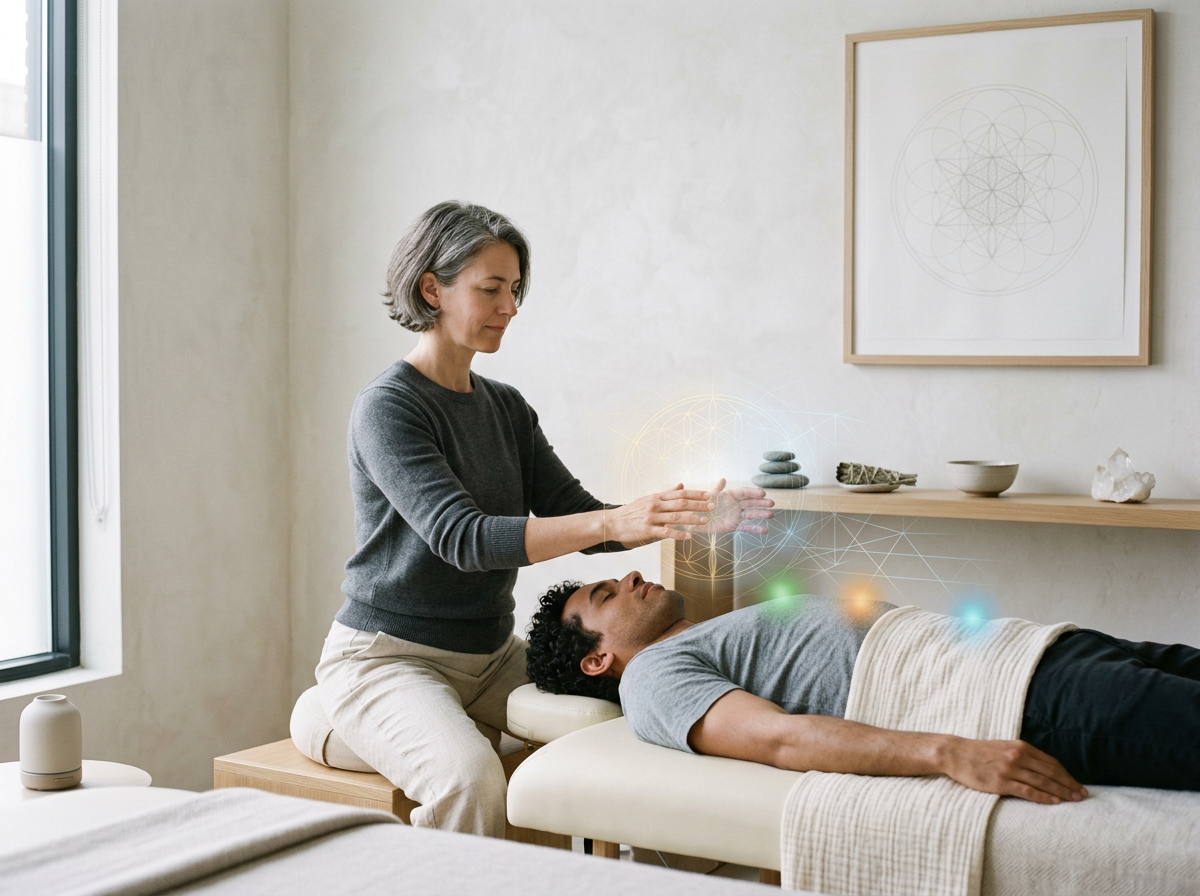
This multi-session course introduces participants to Reiki through a trauma-informed and holistic lens, exploring the relationship between energy, the body, emotions, and the nervous system.
Participants will learn foundational concepts of energetic anatomy from a variety of Eastern healing arts as well as Western science —including the chakra system, nadis, meridians, koshas, ayurvedic constitutions, subtle energy, the nervous system, and more —while developing an understanding of how trauma can influence a person’s sense of safety, embodiment, and connection.
Through guided practices, self-Reiki, meditation, grounding, energetic protection, and experiential exercises, participants will learn how to cultivate greater presence, self-awareness, and energetic awareness.
The course emphasizes choice, consent, safety, touch, energetic boundaries, and compassionate self-inquiry, providing practical tools that can be incorporated into wellness, recovery, and supportive care practices for oneself and others.
Participants will leave with a foundational understanding of Reiki and energetic anatomy, certification in Usui Reiki levels I & II, understanding of what it means to be trauma-informed and how to apply that framework in daily life and healing practices, practical self-regulation and grounding techniques, and a framework for working with energy in ways that honor individual boundaries, experiences, and needs.

When we learn about the plants, we shouldn’t first ask “what can this do for me/what can i get from this?” we should be asking “who is this?” then “how can we give to each other?”
When we learn about the nervous system, we shouldn’t just contemplate anatomy and physiology. we should ask “who are we, really?” and “how Malleable is that?”
when we learn about the spirit, the tao, the layers and dimensions of being, we realize connection, truth, Authenticity, honesty. we shouldn’t just ask “how can I love this more” we should ask “how can i be this?”
EdenGet In Touch
If you're interested in working with us, complete the form with a few details about yourself. We'll review your message and get back to you as soon as possible (normally within 2 weeks).